Wednesday, January 24, 2007

The End of the Matter (Ecc 12:9–14)

Solomon, the Preacher, has been talking about the frustrating and confusing mysteries of life for twelve chapters. The book of Ecclesiastes takes a long, hard look at some of life’s enigmas that cause us to scratch our head and wonder. But Solomon, the wisest man this world has ever known, addressed these hard questions. Solomon, as we know, was famous for his proverbs, many of which are found in our Bibles (12:9). These are carefully stated truisms of life, which Solomon observed and captured in short proverbs (12:10).
Wise words are like goads, or pointed sticks used to herd animals (12:11). When an animal starts to go the wrong way, a herdsman might poke it until it turned back to the right way. In this way, Solomon’s proverbial sayings (which include the book of Ecclesiastes) are like little points in our minds and lives that stimulate our thinking. They help us think right, they make us uncomfortable when we are wrong, and they encourage us to think about many important areas of our lives. These are not questions that have never been asked before; rather, many men for thousands of years have asked and debated these ideas (12:12). You could wear yourself out trying to read what all these people have said.
The conclusion, according to Solomon, is this: Fear God, and keep his commandments (12:13). This is your responsibility as a human being. Because God made you, you are accountable to him (12:14). You may not understand everything about life. You may not always think things are “fair.” You may be confused at times. But you, as God’s creation, must submit to God as Creator. You must obey him. You must reverence him. You will stand before him as Judge one day. Fear God. Obey his commands.

Labels:

Wednesday, January 17, 2007

Remember Now (Ecc 12:1–8)

Life is short. Life is uncertain. We aren’t guaranteed a tomorrow. One of the frustrating and confusing mysteries of life is that we have the most energy and enthusiasm when we are young. As we grow older, we grow wiser, but we find we no longer have the strength or ability to do the things we need to do. It’s almost not fair: the young have energy, and the old have wisdom, and both need what the other has!
Solomon’s answer is this: “Remember now thy Creator in the days of thy youth” (12:1). While you still have ability and energy, give heed to this gem of wisdom: put God first in your life. Don’t wait until you are older and no longer have the strength to serve God. Don’t put off living a godly life. Do it now, while you’re still young.
Why now? Because you aren’t getting any younger. The older you get, the more your strength and energy will fail you. One day your eyesight won’t be as sharp or as keen as it is now (12:2). Some day your hands will tremble, your back will be bent over, and your teeth will fall out (12:3). Your hearing will begin to fade (12:4), and many new difficulties and fears will beset you (12:5). Your hair will turn white, your legs will be unsteady.
Life is short. You won’t live forever. The time will come when even you will grow old and eventually die (12:6). Your body will be buried, decompose, and eventually return to dust, and your God-given soul will live forever in heaven or hell (12:7). Life is short. This is one of life’s mysteries: you won’t live forever (12:8).
The Preacher’s conclusion is this: serve the Lord while you have the opportunity. Don’t put off godly living. Don’t mistakenly assume that you have many years to do right. Put God first in your life right now while you still have strength and energy. Do what is right now while you are still young. Remember your Creator now.

Labels:

Wednesday, January 10, 2007

Known and Unknown (Ecc 11:1–10)

In the frustrating and confusing mysteries of life, we find that there are many things that are unknown. If you ever think you have amassed great wisdom, look around and think about all the things you don’t know. You will be amazed. The immensity of the unknown dwarfs even the collective knowledge of all mankind. There are many things we simply don’t know.
In the midst of life, which is often frustrating and puzzling, the Preacher advises us to be generous in our dealings, because we simply do not know if or how that might come back to us (11:1–2). Generally speaking, people who are generous find that others are generous to them as well. Since we do not know the future, we should live accordingly.
Weather patterns are fairly predictable, but sometimes even the meteorologists are surprised. Can you guarantee which way a tree will fall? We just don’t know (11:3). If you spend your whole life worrying about all of life’s uncertainties, you will be paralyzed with fear and never do a single thing (11:4)!
Nobody has ever seen an unborn child receive an eternal human spirit, and nobody knows everything that God does or why he does what he does (11:5). We simply don’t know. You don’t know which seeds that you plant will grow and thrive or which will be trampled or die of disease, so plant and work and trust the Lord for the rest (11:6). You just don’t know, so be faithful in what you should be. Enjoy life, but remember this: you don’t live forever (11:7–8).
As you live and pick your way through life’s unknowns, there is one thing that we do know and that should remain in the front of our minds: we are accountable to God for our actions (11:9). Use your youth wisely, for God’s glory, and not in a way that will cause you to look back some day with regret (11:10).

Labels:

Wednesday, January 03, 2007

Wise Words for Living (Ecc 10:1–20)

In the frustrating and confusing mysteries of life, we find wise words for living in God’s Word. Ecclesiastes 10 is a collection of proverbs (similar to the book of Proverbs) that give various examples of wise living, truisms, and other observations about life. I encourage you to read this chapter along with my short synopses of each proverb.
While wise living takes years of hard work, it can all be ruined in a few moments of sinful folly (10:1). The heart of a man is the source of his actions, a truth that our society today would do well to learn (10:2). Foolish and sinful thinking affects every area of life (10:3). Remaining calm can diffuse a tense situation, while reacting in kind escalates an already sticky situation (10:4).
Foolish living is not limited to poor, underprivileged people; rather, it can be found throughout all strata of life (10:5–7). However, those who are unscrupulous in their dealings usually end up becoming a victim of their own cruelty (10:8–9).

Oftentimes brute force does the job, but skillful application of that force multiplies its effectiveness (10:10–11). The speech of a man reveals his character, often determines his course in life, and demonstrates whether he is wise or a fool (10:12–15). A country is happy when its leaders are wise and prudent in their dealings (10:16–17). Hard work is the answer for those who complain about being poor. Even a modest home can be well-repaired (10:18). The good things of life, God’s gifts, should be enjoyed as we go through life (10:19). Do not slander people because it will be your ruin (10:20).
As you read these proverbs, some seem a little random, but the underlying theme is that we have a responsibility in life: obeying God and living in a way that pleases him. There are many things about life that we cannot control, but we are responsible for our choices, actions, words, and thoughts before God.

Labels:

Wednesday, December 27, 2006

Life Is Short (Ecc 9:1–10)

One of the frustrating and confusing mysteries of life is death. All men are in God’s hand (9:1), and every one experiences death (9:2). It does not matter if they are good or bad, religious or irreligious, honest or dishonest: every one faces death (9:3). This fear of death unites man: the writer says it is better to be poor and weak and still alive, then powerful and rich and dead (9:4). We often say that we value “life over limb.” Once someone is dead, they cannot come back and change their life; their future is sealed (9:5–6).
Because of the certainty of death, the Preacher encourages us to find enjoyment and fulfillment in what we do have in this life: enjoying the small delights of every day life (9:7). We shouldn’t cower before our impending demise, but enjoy the time we have now (9:8). If you are married, you should enjoy your spouse, and the pleasure of their companionship (9:9). Wherever God has planted you, you should bloom and grow for his glory in the time on this earth that he has given you (9:10).
Life is uncertain. Sometimes the strong, the powerful, those who have great physical endurance die young (9:11). We do not know how many years (or maybe just days!) we have left in our lives (9:12). Therefore, it is better to be wise in the time God gives us than simply to be powerful or rich (9:16). For example, imagine a powerful army coming to crush a small, weak city. However, one poor but wise man devises a plan to thwart the army, and their plans are foiled. No one remembers the name of that poor, wise man, they just remember that the great army failed and was turned back. But, as the Preacher said, it’s better to be wise and alive than rich and dead. The pointlessness of power and wealth is made even more clear when we see how temporary it is: you can’t take it with you! Life is short; enjoy what God has given for his glory!

Labels:

Wednesday, December 20, 2006

Life As We Know It (Ecc 8:1–17)

As we live out the days of our sometimes frustrating and confusing existence on this earth, the Preacher gives us a few pointers. First, we must obey the authorities that God has set up. Wisdom (godliness) makes a difference in daily life (8:1), and the wise person submits to God’s authority as well as the earthly authority figures He has set up (8:2–4; cf. Rom 13:1). The best way to avoid trouble in this life is to obey authority (8:5). Many things in life we cannot control, but one thing we can do is submit to authority (8:6–9).
Second, we ought to fear God. Since man is not always punished immediately for his wrongdoing, he assumes that he has gotten away with his sin (8:10–11). However, the truly wise (godly) person realizes that life consists of more than just the few short years of our physical existence (8:12). While the wicked person may get along fine here, he must answer one day to God for his deeds (8:13). A wise person fears, reverences, and obeys God.
Third, we ought to remember that God is God. Again, as we look around, we see that not only do the wicked sometimes go unpunished, sometimes they even seem to be rewarded (8:14)! That might cause us to try to get what we can in this life (8:15). However, the Preacher realized life is more than what we can see (8:16). God is in sovereign control of all things, and we as human beings will never know all that God does or why he does it (8:17). We must let God be God and remember that He is the Creator and we are the creation.
Since God is Sovereign of the universe and knows all things, we ought to treat him as such. Therefore, we must fear him, obeying the things that he has commanded us to do. Furthermore, we ought to obey and submit to the authorities he has set over us in this life. This is a wise and godly way to go through life as we know it.

Labels:

Wednesday, December 13, 2006

Do Right Because It’s Right (Ecc 7:15–29)

One of the frustrating and confusing mysteries of life is why those who do wrong sometimes seem to prosper, while those who do good sometimes suffer hardship (7:15). The Preacher’s answer is that fearing God is never a foolish choice (7:16–18). God will punish sin, even if he does not do it immediately. Wise and godly living is a benefit to any person (7:19). Despite our best intentions, each of us is a sinner and in no way perfect (7:20). We are easily offended by what others say of us, but we have often wronged others with our words (7:21–22). Perfection eludes all of us because we are sinful (7:23–24).
Even when we try to do what is right and pursue God in our lives, others may lay traps and try to lure us into evil (7:25–26). It is rare to find a person who is committed to obeying God and pleasing him in all things, and it is even more rare for a person to avoid the snares and temptations around him (7:27–28). God created us to obey him, but we have desired “our own way,” trying to be our own little “gods” (7:29; cf Isa 53:6).
In your life, it may seem difficult or even impossible to do what is right. Others may be trying to trap you or lure you into sin, and you feel like you are constantly beleaguered by temptation. Your own sinful desires rise up and want to disobey God. Your personal failures in the past discourage you and cause you to want to give up. But godly living is not something we pursue for immediate gratification, personal satisfaction, or physical pleasure. Rather, a life lived to God’s glory is a tribute to the longevity of eternity, doing what is right because it’s right.
If you look around and wonder what the benefit here on earth of obeying God is, you may become frustrated and discouraged. We must keep our eyes on our Creator, who commands us to live wisely, and do what is right because it’s right.

Labels:

Wednesday, November 15, 2006

Wisdom is Better than Folly (Ecc 7:1–14)

In life’s frustrating and confusing mystery, it may seem worthless to live a godly life. However, Solomon lays out in a beautiful poem the superiority of godly living.
A good reputation gained by godly living is better than material wealth earned apart from it. A life well lived is better than unrealized and uncertain potential (7:1). A funeral is better than a party, because it helps us think about the seriousness of life (7:2). Solemn thought is more profitable than comedy, because true happiness is deeper than a quick laugh (7:3). The wise person is characterized by serious and grave thinking, while the foolish, ungodly person is interested only in fun and laughter (7:4). The rebuke of a wise man is of greater worth than the empty jokes and songs of fools (7:5–6). Extortion or dishonest gain perverts an otherwise good man and corrupts his heart (7:7).
It is better to finish a project than to start another one, because patient endurance is better than boastful pride (7:8). Forbearance and patience are better than the quick temper of a fool (7:9). Constant reflection and yearning for “the good ol’ days” is a waste of time (7:10); rather, one should live wisely today in order to leave an inheritance of wisdom to one’s children (7:11). Money offers financial security but the reward of godly living is eternal life (7:12).
A godly person realizes that God alone is Sovereign, and that he, as a human being, is subject to God (7:13). God sends blessing and God also sends difficulty— both are from him (7:14).
As young people, it is easy for you not to think about eternity or serious things, but the Bible says we would do well to think about the end of our lives, and not just the here and now. What value will what you are involved in now be in a year? What kind of “fruit” will it bear in a year? In five years? In ten years? Twenty?

Labels:

Wednesday, November 08, 2006

The Futility of Possessions (Ecc 5:8–6:12)

Another of life’s frustrating and confusing mysteries is the futility of gaining possessions. Oftentimes the poor are oppressed by the wealthy, but God sees all and repays accordingly (5:8–9). However, greater possessions are not the answer, because possessions never satisfy (5:10). With greater income, there are more problems and greater expenses (5:11). Think about your favorite ball player making millions a year: he has to worry about all his houses, cars, taxes, properties, investments, retirement funds, plus all the people who want to get their hands on his money. Almost makes you want to be poor! Solomon (who was not a beggar) gives this conclusion: it is better to work hard and go to bed tired, then to be pampered and not be able to sleep (5:12).
The Preacher gives an example of the futility of possessions: a man saves up and amasses a huge wealth of possessions, only to lose them all in one catastrophic event or bad business deal (5:13–14). Now he has nothing to leave to his children and nothing to live on, and he dies a pauper (5:15). There is no advantage to gaining possessions (5:16–17). The best way seems to be to work hard and enjoy the blessings that God gives (5:18–19), thanking God for the present rather than dwelling on the past (5:20).
Another disadvantage is one that Solomon has brought up earlier: oftentimes people cannot enjoy their possessions at all because they are left to another person (6:1–2). To live an unfulfilled life is worse than never living at all (6:3–5), and death is the “great equalizer,” because it happens to rich and poor alike (6:6). How much of our hard work is “eaten up,” literally or figuratively (6:7–9)? Life is short, and man is not in control of his fate or destiny (6:10). Man must trust in One greater than himself to do what is right and best in his life (6:11–12). To try to control one’s life by gathering possessions is a fruitless and worthless endeavor.

Labels:

Wednesday, November 01, 2006

The Importance of Reverence (Ecc 5:1–7)

Because life is often frustrating and confusing, it can be easy to become cynical and flippant toward God. Solomon takes time now to warn the reader about this danger and emphasize the importance of fearing and revering God. He calls on the reader to use care and caution when approaching God in worship (5:1). He is not advising against worship, but against irreverent worship.
He warns us to be careful in our words (and thoughts) to and about God (5:2). God is not merely another person; he is the God of heaven, the Sovereign of the Universe. It is better to be guarded in one’s words than to speak ill-advisedly. Many people think of God as just another “buddy” and forget who God really is. The more you talk, the more opportunities for evil you have (Prov 10:19). It is difficult to talk a lot and still remain a wise (godly) person (cf. Jas 3:1). Just as too much activity brings restless dreams, so too much talking renders one a fool (5:3).
Along the same lines, one should not make promises to God lightly. The Old Testament believers made vows to God in prayer, and when God answered, they were to “pay their vows” by offering the appropriate sacrifices they had promised to God. The Preacher encourages the readers to fulfill their vows and bring the promised sacrifices, because God deserves to be revered and honored (5:4). If you cannot or will not pay your vow, it would be better not to have promised it (5:5). Again, a wise person is very careful about what he says because he realizes that he is accountable to God (5:6).
We must not treat God lightly, but fear and reverence him (5:7). He is not another human being, but he is the completely holy God. He should be treated as such, and our speech ought to reflect the fact that we acknowledge God’s existence and his right to judge us for our actions.

Labels:

Wednesday, October 25, 2006

The Blessing of Companionship (Ecc 4:5–16)

In the midst of the frustratingly confusing mysteries of life, God has blessed us. He has given us the responsibilities of life to bring us fulfillment, but only an understanding of eternity and death enables us to enjoy the gifts that God has given us in this life. The foolish, godless man destroys his own life because of his refusal to acknowledge God (4:5).
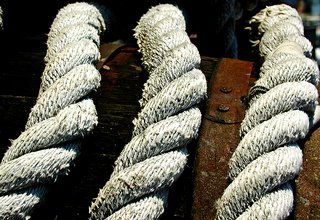
One of the blessings God has given us is companionship: sharing our lives with others. How fruitless and unfulfilling life is when one has no other person with which to share it (4:7–8)! A life is truly lonely without any companion. What point is there in stockpiling goods and accumulating wealth if you have no one to leave it to? Therefore, the Preacher concludes, two people are better than one person alone, because they find fulfillment in one another (4:9). In addition, when one person falls, his companion can help him up again, while someone who is alone has nobody to help him (4:10). Two people can keep each other warm (4:11), and there is always safety in numbers (4:12). The Preacher uses a braided rope as an example of something that is made stronger by additional strands.
Life teaches many lessons, but if one does not learn these lessons, old age is not a blessing, but a curse (4:13). A foolish old man is even worse than an inexperienced young man, because the older man can do more harm, since others will follow him (4:14–15). However, history will show the error of his ways (4:16).
Perhaps we think of our families and friends as nuisances or things that get in the way, but God has provided companionship to make our lives fulfilling. God has given you parents who care about you, many of you have brothers and sisters, and you have friends who can encourage you. What kind of a companion are you? One who is a blessing, or one who is foolish and a curse to others?

Labels:

Wednesday, October 18, 2006

From Dust to Dust (Ecc 3:16–4:4)

Although our infinite God has given us the responsibilities of life to bring us fulfillment, as we look around, people are not fulfilled. The Preacher saw that wickedness abounded in the earth (3:16). This did not bother him, because he knew that God would judge it in his time (3:17). The sobering reality is that wicked or not, man or beast, everything in this fallen universe exists under the curse of death (3:18–19). Man was created by God from the dirt and after death, he will decompose and return to dust. In fact, the Preacher coins the famous phrase "from dust to dust" (3:20). An understanding of eternity and death drives us to enjoy the gifts that God has given us in this life (3:22).

Furthermore, life is full of difficulty and oppression. It seems that the weak are oppressed by the powerful, and nobody can seem to stop them (4:1). Sometimes it seems as if death is the only way to get away from this kind of oppression (4:2). The Preacher, however, says that even better off are those who have not yet been born and have not seen the evil in the world (4:3). His conclusion is that mankind’s envy, not God, is the source of all this oppression and conflict (4:4). The difficulties of life are caused by man’s self-centeredness and his desire to put himself first.
Perhaps you feel like life is unfair and that you are constantly being pushed around and never able to meet your goals and dreams. Perhaps you are bitter at God because of things you have not been able to do. Proverbs 13:10 says, "Only by pride cometh contention." In other words, our pride is the cause of interpersonal conflict, arguments, and strife. When you feel like everywhere you go there is conflict and difficulty, you should check your own heart for pride. When we insist on doing things our way, when we want to do them, it always causes conflict. This too is a futile "striving after wind."

Labels:

Wednesday, October 11, 2006

One Way to Fulfillment (Ecc 3:9–15)

Although life often seems frustrating and futile, God has appointed each of the seasons of life (3:1–8). People may blame God for difficulties and hardship, but these come from his all-knowing and gracious hand. Likewise, the good things of life are gifts from a loving God. How can we experience fulfillment in our lives?
Each one of us has tasks in front of us. These include school, jobs, responsibilities at home or church, sports teams, music lessons, and a host of other things. What is the profit in doing these things (3:9)? The Preacher’s answer is that these responsibilities are given by God (3:10), and he makes everything beautiful in its time (3:11). Each of the different tasks in life are carefully directed by God, and he will cause them to flourish in his perfect timing.
Being made in the image of God, mankind has an innate desire for something beyond this temporary life. He has an eternal longing that cannot be satisfied with the physical and earthly (3:11). We must realize that the eternal and infinite God has ordained these tasks for us (3:12). The work and responsibilities and opportunities that God has set before us are his gift to us (3:13). God is infinite and eternal; he knows what is best and lasting joy and satisfaction can only come from him (3:14–15).
You and I may look at the work before us at school, upcoming responsibilities or obligations, and be discouraged. How can we ever get through all this work? Or we may look ahead and say, “There is no end to the demands of life— I just want to give up.” We must realize that our infinite God has given us these jobs to satisfy us and fulfill us. We must submit to his direction and plan because trying to find fulfillment in ourselves is futile. God’s gift to you is the work before you. Do it for his honor and glory (Col 3:23; 1 Cor 10:31). Realize that God will reward us for obeying him, even if we never receive any reward on this earth (Col 3:24).

Labels:

Wednesday, October 04, 2006

A Time for Everything (Ecc 3:1–8)

Life to the Preacher seems frustrating and futile. Although they have been given by God (2:24–26), knowledge, enjoyment, and hard work are unsatisfying. How does this work? In chapter three, King Solomon writes a beautiful passage that contrasts the varied times and seasons of life, appointed and directed by God (3:1).
Life involves both birth and death, times of growth and times of decline (3:2). Times of pain and hurt as well as healing and recuperation are part of life (3:3). Life brings joyful times and sorrowful times (3:4), stages that involve accumulating possessions as well as getting rid of things. There are times of close friendship and times of loneliness (3:5). Gain and loss, saving and spending (3:6), tearing and mending, are all part of life. There are times when it is best to be silent, and there are times when one must speak up (3:7). Life involves periods of friendship and intimacy, as well as times of animosity and personal conflict (3:8). All of these contrasting things are part of life as God has given it to those whom He has created in His image.
Many times you and I are discouraged or disappointed when life doesn’t seem as wonderful as we had hoped or dreamed. Life is not a fairy tale or story book where everybody always lives “happily ever after.” When we encounter difficulties in our daily lives, both small and large, we can get upset, frustrated, confused, or even angry with God.
However, we must remember that everything in our lives (even difficulties and sadness) come from the sovereign hand of our God. Nothing escapes his control and nothing is outside of his goodness. As we read in the New Testament, everything that happens in our lives is for our benefit— it helps make us more like Jesus Christ (Rom 8:28–29).

Labels:

Wednesday, September 20, 2006

The Futility of Hard Work (Ecc 2:18–26)

When King Solomon looks at life, it seems frustrating and futile. As he has examined things that promise fulfillment, he has found that education is too limited in scope (1:12–18), legitimate pleasures were unsatisfying (2:1–11), and that death comes to all men, regardless of their lives (2:12–17). Perhaps the answer is simply to grit one’s teeth, dig deep, work hard, and make the best of life.
What about hard work, or “labor” as the Preacher calls it (2:18)? The disappointment of hard work is that you can’t take it with you. When you die, someone else will inherit everything you have worked so hard to do. And who knows if that person will continue to keep it or not even appreciate it (2:19–23)?
The man who lived in our house before my wife and I moved in was a world-class gardener who spent his time puttering in the flower beds. He built a fish pond, put in brick walkways, and many different kinds of flowers and shrubs. After he died and his wife sold the house to us, we enjoyed all of his work. However, I am not a very good gardener and I don’t have the time to keep up the flower beds. Little by little, they have grown less manicured because we just don’t have time to keep them up. This is what Solomon is talking about: this man gave his life to his garden, and now, just a few years later, all his work is coming to nothing.
The King gives his first conclusion at the end of this chapter (2:24–26): Even though our work sometimes seems frustrating, it is a gift from God to be enjoyed. Many things in life seem very confusing and mysterious, but God has given us work and wisdom to fulfill our lives here on earth. Remember that in the perfect garden of Eden, God created man and gave him work to do. Of course, our work should never lose sight of eternity, but God created work for our benefit and enjoyment.

Labels:

Wednesday, September 13, 2006

The Futility of Wise Living (Ecc 2:12–17)

King Solomon’s assessment of life as he sees it is that it is futile. So far, he has been examining things in life that promise fulfillment. Knowledge and education are too limited in scope (1:12–18), and the pleasures of life were also unsatisfying (2:1–11). What could he do that would last and have some sense of permanence to it?
The Preacher turns to the issue of living wisely or living foolishly (2:12). Just as in the book of Proverbs, wisdom does not mean being smart or intelligent, but godly; that is, one who lives according to God’s wisdom. As Solomon looked at the pros and cons of living according to God’s law and living based on man’s thinking, he acknowledges that there is a benefit to living wisely (2:13). The wise person who lives according to God’s Word avoids many difficulties and struggles in their life. It is like walking through life with one’s eyes open instead of closed (2:14).
However, no matter how one lives, all men face the same future: death (2:15). This is a frustrating puzzle: some men live sinfully and foolishly, and others in a godly and holy way, but all men die. And sooner or later, the wise man and the foolish man are both forgotten (2:16). This also seemed frustrating and unsatisfying to King Solomon (2:17). What was the point of living wisely?
That is a pretty striking question: Why should we bother trying to do what is right? We will all live our lives and someday die, and that will be that, right? Of course, we haven’t reached the Preacher’s conclusion yet, but this is a question we certainly have all asked. An important answer to this question is faith. Faith is believing something we cannot see. If we live based on what we see and how things seem to us, we cannot help but be discouraged as we look at life. Instead, we must live life based on the truth of God’s Word. By faith we know that reality is what God says it is.

Labels:

Wednesday, September 06, 2006

The Futility of Pleasure (Ecc 2:1–11)

The Preacher, King Solomon, is examining things in life that promise fulfillment. He has concluded that knowledge and education are too limited in scope (1:12–18). Now he turns to pleasure. He decides to see if pleasure can provide meaning and fulfillment to life, but his conclusion is that this too is futile (2:1–2).
Now when we think of pleasure, we might immediately think of sinful or lustful pleasure, but Solomon says that even in his quest for pleasure his heart was “acquainted with wisdom,” or better, guided by wisdom (2:3, 9). Therefore, he was not exploring illicit or sinful hedonism, but the pleasures of life. He was going to see if he could buy happiness. Remember, he was a king and the richest man around, so if anybody could do it, it would have been him!
He built lavish palaces and elaborate gardens (2:4–6), he hired slaves to serve him hand and foot, and he had huge flocks and goats and sheep, an indicator of wealth in those days (2:7). He amassed a huge treasure of silver and gold, and he enjoyed the arts, singing, and music (2:8). In short, he was successful! He had more of the good things that life offers than anybody around (2:9). Nothing was beyond his reach: he could do anything or have anything he wanted (2:10).
Even then, the Preacher says that this pursuit of “good living” was empty and unsatisfying. He says, “Then I looked on all the works that my hands had wrought, and on the labor that I had labored to do: and, behold, all was vanity and vexation of spirit, and there was no profit under the sun” (2:11). Even having and doing everything he wanted wasn’t good enough. The same is true today: what matters to our age won’t last five years, let alone five hundred. It looks like fun and appears to bring satisfaction, but the Preacher says that this is emptiness and futility as well.

Labels:

Wednesday, August 30, 2006

The Futility of Knowledge (Ecc 1:12–18)

The Preacher, King Solomon, has made a statement that life is futile. He is looking for something that will last, something that will impact the future and leave his mark. He wants to fill the void in his life with something that promises fulfillment.
He turns first to knowledge and learning. As a king, he had access to the best teachers and all the learning that day had to offer. Imagine a full-ride scholarship to any university in the country! Anything that Solomon wanted to learn, he had only to give the word, and the best instructors in that discipline would come to teach him. So the Preacher “gave his heart to search out wisdom” (1:13). He studied everything available to him, but it did not satisfy.
His conclusion was that knowledge and education are “vanity and vexation of spirit” (1:14). Learning did not satisfy. Simply learning about man’s problems and being able to categorize and label them did not fix anything (1:15). Education accomplishes nothing by itself. Learning without application to life is entirely futile.
It was not that the Preacher wasn’t smart— he was! His knowledge superseded all who had gone before him (1:16). He was quite literally the smartest man in the world (cf. 1 Kgs 3:11–12). His conclusion was that learning is a never-ending endeavor: there is no end to knowledge. Education is a “vexation of spirit,” or better, striving after wind. Never in our lives will we attain to the vast storehouse of knowledge (1:17). Furthermore, the more we know, the more we see the problems of ourselves and others.
Education and knowledge was not the answer to the Preacher’s quest for life’s meaning. We, too, cannot solve the riddle of life’s purpose by learning more and more things. There must be a purpose to that learning, or else it is a futile endeavor.

Labels:

Wednesday, August 23, 2006

What’s the Use? (Ecc 1:1–13)

Have you ever wondered what the point of life is? Why are we here on earth? What purpose do we serve? These are serious questions that men have asked for centuries. The book of Ecclesiastes asks and answers these questions.
The book opens with the “words of the Preacher, the son of David, king in Jerusalem” (1:1). Although he does not give his name, we know David’s son, Solomon, was king after him in Jerusalem. He calls himself “the Preacher,” and in this book, he reflects back on his life and the meaning of life itself. He begins by saying, “Vanity of vanities, all is vanity” (1:2). All of life is confusing, frustrating, even mysterious. It just doesn’t make sense. Perhaps you have felt this way about life, your friends, your family, or school. What’s the use?
Life goes on (1:3). Generations pass (1:4), days come and go, sun up to sundown (1:5). Clouds gather, rain falls, the water runs back to the oceans and the cycle starts all over (1:6–7). Life is like a giant wheel, going around and around, history repeating itself over and over (1:8–9). Nothing is really new; it is just a rehashing or repackaging of old things (1:10). We ignore history, and someday, those of the future will ignore and forget about us (1:11).
What a depressing picture! Do you ever feel like that? Maybe on a gloomy, gray day you feel like your life is very insignificant and pointless. The world around us is full of cynicism and hopelessness. Popular music sings of the futility of life. Perhaps some of your friends are obsessed with death, since there is no point in life. Others may turn to alcohol or drugs to fill the emptiness they feel.
The Preacher is going to explore a lot of options before he comes to his conclusion (at the end of the book), but he sets the scene: life seems pointless. What can give life meaning? The Preacher attempts to fill the void in his life with many different things. Next week we’ll begin looking at some things that promise fulfillment.

Labels: